
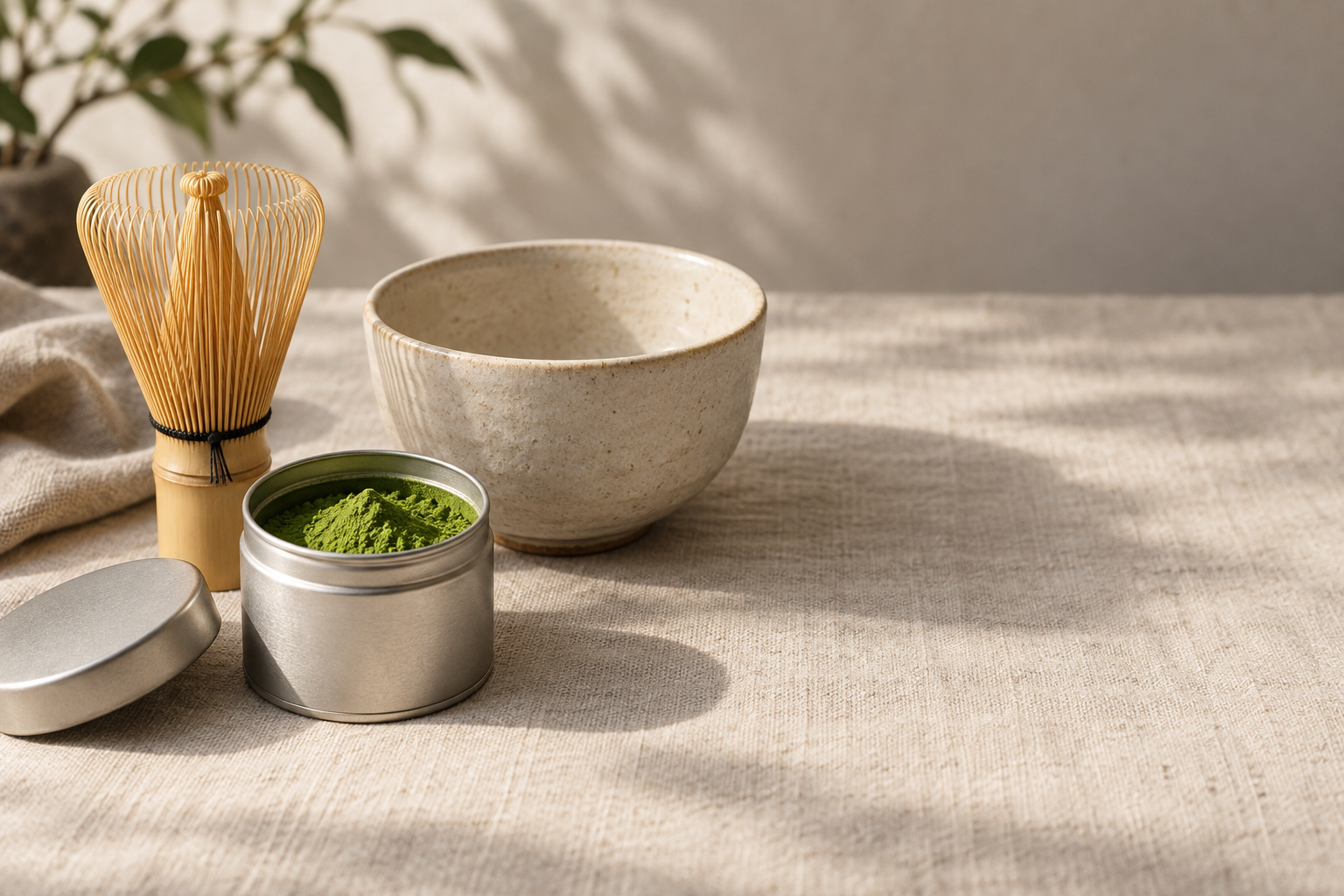
Matcha starts with a particular kind of tea leaf
Authentic matcha is made by milling tencha into a fine powder. Tencha comes from tea plants that are shaded before harvest; the leaves are steamed and dried without the rolling used to make many other Japanese green teas. Those extra growing and processing steps take time and resources.
Not every green powder sold as matcha is made from tencha. Product names and descriptions can vary by market, so look for details about the tea’s source and how it was made if that distinction matters to you.
Growing and processing add cost
Shading tea plants before harvest requires planning and materials, and the leaves still need to be picked and processed promptly. Making tencha also involves processing steps that differ from those used for ordinary rolled teas. Harvest timing, growing methods, labor, equipment, and the amount of tea produced can all affect costs.
Some matcha is made for whisking and drinking on its own; other matcha is intended for drinks with milk or for cooking. Different lots and production choices can result in different prices, but a label such as “ceremonial” or “culinary” is not enough by itself to explain a product’s quality or value.
Milling creates another step
Tencha must be ground into a fine powder before it becomes matcha. Milling adds equipment, time, and handling to the process. Fine texture is also one of the qualities considered when matcha is evaluated, alongside appearance, foaming, and taste.
Grinding is only one part of the cost. The starting tencha, how it was grown and processed, and how the finished powder is handled also matter.
Supply and demand can move prices
Matcha prices are not fixed. The latest Japanese Ministry of Agriculture, Forestry and Fisheries tea-market data available for this article report that 2025 tencha prices averaged 8,562 yen per kilogram across harvest periods; first-harvest tencha averaged 10,030 yen per kilogram. In that data, tencha averaged about 4.9 times the price of sencha. These are prices for rough tea in Japan, not retail prices for finished matcha in the United States, so they are useful context rather than a direct comparison.
Demand also affects what is available and what buyers pay. Japan’s agriculture ministry reported that the value of green tea exports, including powdered tea, rose in 2025. That figure covers green tea exports broadly, not matcha alone. Demand, harvest conditions, and production capacity can change, so prices and availability may shift from one season to another.
Does a higher price mean better matcha?
Not necessarily. Price can reflect the cost of the tea and its production, but it does not guarantee that a particular matcha will taste better to you. Preferences differ, and matcha made for drinking plain may not be the best fit for a latte or a recipe.
Rather than relying on price or a grade label alone, compare the intended use, listed ingredients, origin and production details, package size, and freshness information. For a drink with milk or for baking, a matcha intended for those uses may be a practical choice. For whisking and drinking plain, you may prefer to compare smaller packages before buying more.
A practical way to judge value
Compare the cost per serving, not just the price of the tin. A small amount of powder is used per cup, so package price alone can make comparisons misleading. Also consider how quickly you expect to use it and whether the packaging helps protect the powder after opening.
There is no single price that defines good value for everyone. Understanding how matcha is made and choosing it for the way you plan to use it can make the trade-offs easier to assess.
Read next
Sources
- Tea market conditions, including 2025 tencha prices (Ministry of Agriculture, Forestry and Fisheries of Japan)
- Green tea export trends for 2025 (Ministry of Agriculture, Forestry and Fisheries of Japan)
- Matcha tea — Definition and characteristics (ISO/TR 21380:2022)
- Green tea labeling standards: names and definitions (Japan Tea Central Association)
- Sensory Evaluation of Matcha (J-STAGE)