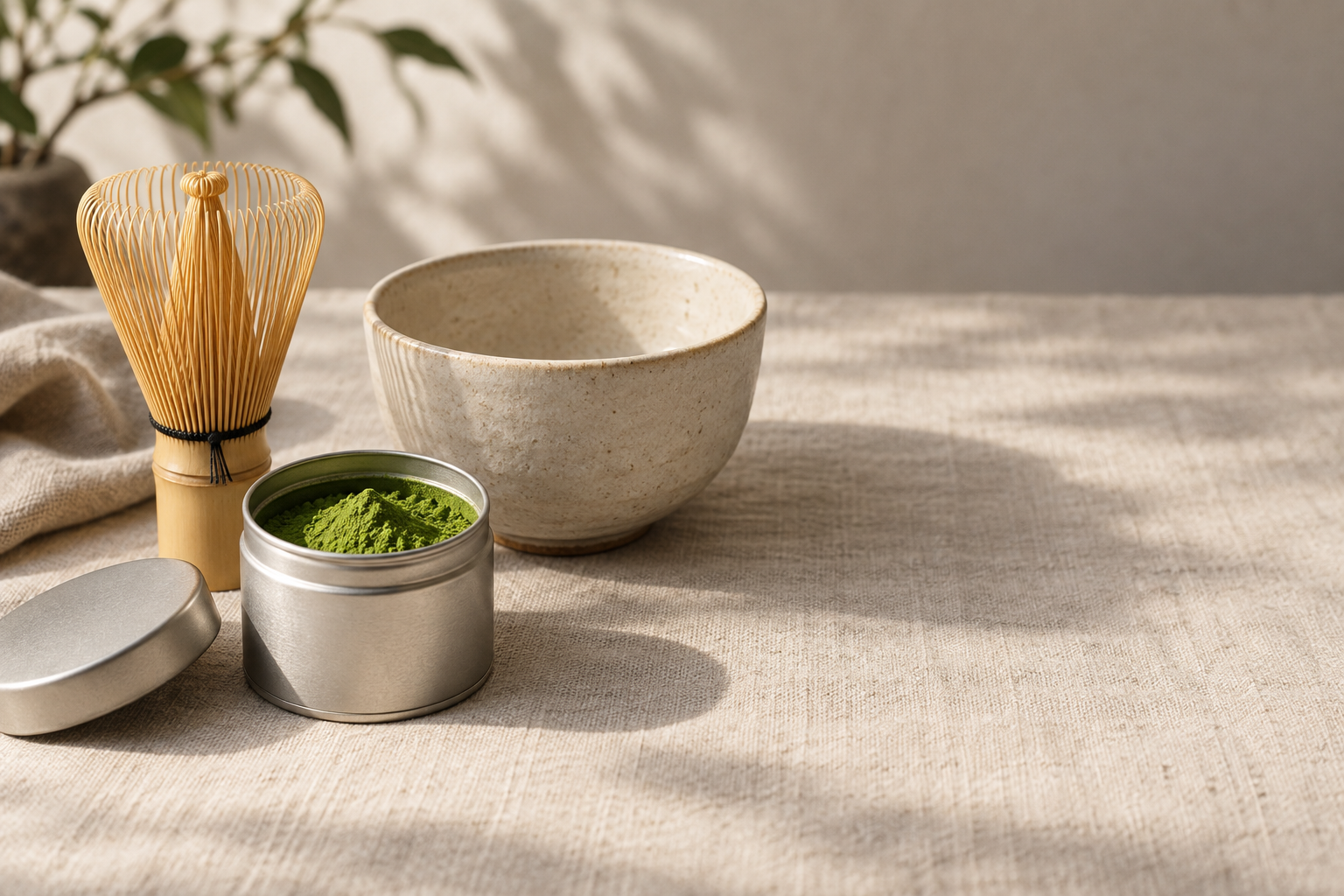
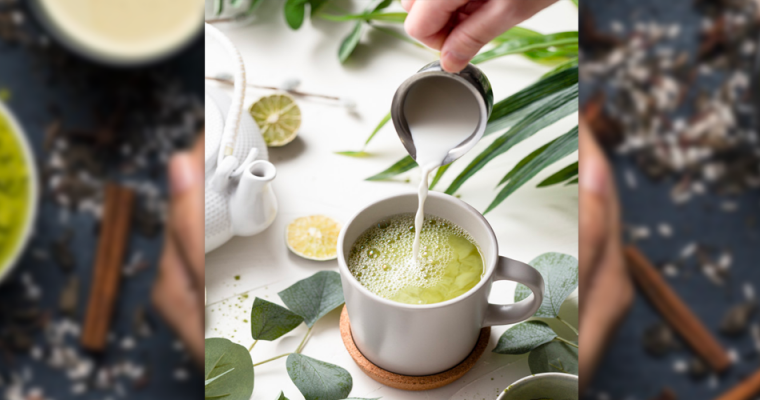
No—not automatically. An expensive matcha can make an excellent latte, but price alone does not tell you whether its flavour will survive milk, ice or sweetener. The best value is usually a fresh, well-described matcha with enough character for the latte you actually make. A delicate tea designed to be whisked with water may cost more without tasting clearly better once it is diluted.
What milk changes
Milk softens bitterness and astringency, but it also mutes quieter aromas and savoury notes. Sweetener and flavoured syrups cover more of them. This is why a bold matcha can work better in a latte than a subtle, more expensive one.
That does not mean every inexpensive cooking powder will taste good. A stale, harsh or poorly described product does not become a bargain because milk makes it easier to drink. Think of “latte matcha” as a job description: it should taste clean and remain recognisably like matcha in your normal recipe.
Do you need ceremonial grade?
You can use a product labelled ceremonial grade, but the words do not certify a universal quality level. Sellers use them differently, usually to suggest that a matcha is suitable for drinking with water. Japan’s tea industry has a definition for matcha itself, and an ISO technical report describes its cultivation and manufacture, but neither creates a universal ceremonial grade.
Our guide to ceremonial-grade matcha explains what the label can and cannot tell you. For a latte, the seller’s intended-use guidance and flavour description are more useful than a prestige word on the front of the pack.
When paying more can be worthwhile
A better tea is easier to notice in a small, lightly sweetened latte where matcha is a large part of the drink. You may value a smoother texture, a cleaner finish or a particular balance of sweetness, bitterness and savoury flavour. If you also drink the same matcha with water, spending more on one versatile tin can make sense.
The case is weaker when your usual drink contains a large amount of milk, plenty of ice, syrup or other strong flavours. In that setting, some of the qualities that make a fine matcha expensive may be difficult to detect. Reporting on current matcha demand, the Associated Press similarly noted a tea educator’s view that lower-grade matcha can be the more sensible choice for milk drinks because fine matcha is delicate and requires more powder to stand out in a latte.
A practical way to choose
Start with your recipe, not a grade. If you do not yet have a repeatable one, use our matcha ratio guide and keep the amounts of matcha, water, milk and sweetener consistent while comparing powders.
On a product page, look for:
- an origin stated more precisely than imagery or vague references to Japan;
- a packing or best-before date and clear storage advice;
- flavour notes and an explicit recommendation for lattes or mixed drinks;
- a small pack you can finish while it is fresh; and
- a price you can compare per gram and per cup.
At 2 g per drink, divide the pack weight by two to estimate the number of lattes. Then divide the price by that number. This does not measure quality, but it turns an impressive tin price into a useful cost per serving.
Run a small comparison before buying more
Make two lattes with the same ratio and change only the matcha. Taste them before adding syrup, then add the amount you normally use. If you cannot identify a worthwhile difference in your finished drink, the dearer powder is not better value for that purpose. You can still prefer it with water.
Begin with a modest pack rather than stocking up on an unfamiliar tea. Once you know which flavours remain clear in your milk of choice, you can spend more selectively. For a wider buying check, use our first-purchase guide and product-listing checklist.